Fluke 8060a Multimeter
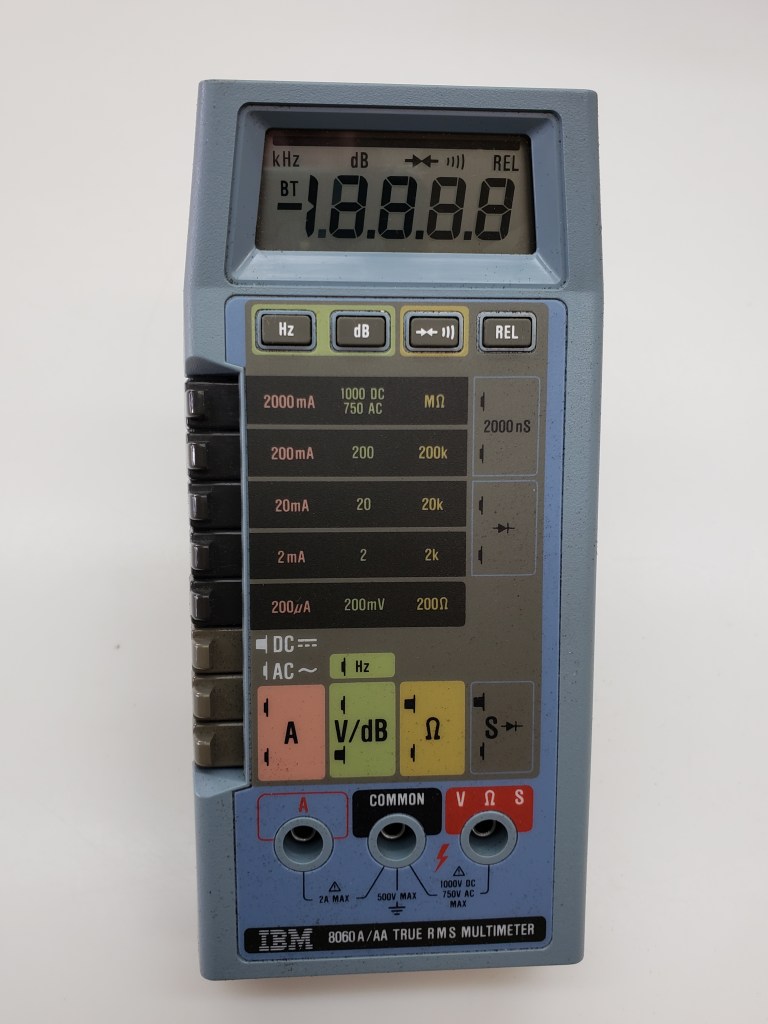
In the 1980’s the 8060a was a very desirable voltmeter to own; I believe it still is today. This meter was resurrected from the almost dead. When a new 9 Volt battery was put in the meter, it would not power up correctly. The display was all garbage. Feeling I didn’t have much to lose, I took the meter apart and carefully removed the display LCD. I tried several things to get the display to work properly. What finally worked was to carefully wipe the edges of the LCD with an isopropyl alcohol pad that was not too wet. I let the alcohol almost all evaporate before touching the edge of the display, so it wouldn’t destroy the contact surface on the LCD. I doubt these LCD’s are available as parts anymore.
After the meter was working again, I decided to go one step further and replace all of the electrolytic capacitors. The paste inside electrolytic capacitors dries up over time. After all, these capacitors were about 40 years old. Fluke uses the best components in their products; they are well made. About a dozen electrolytic capacitors were replaced. Contact cleaner was used on the sliding switches. Now the meter works like new. It has 4 1/2 digits accuracy, and with a 9 volt battery, and it’s portable.

Old Capacitor Tester

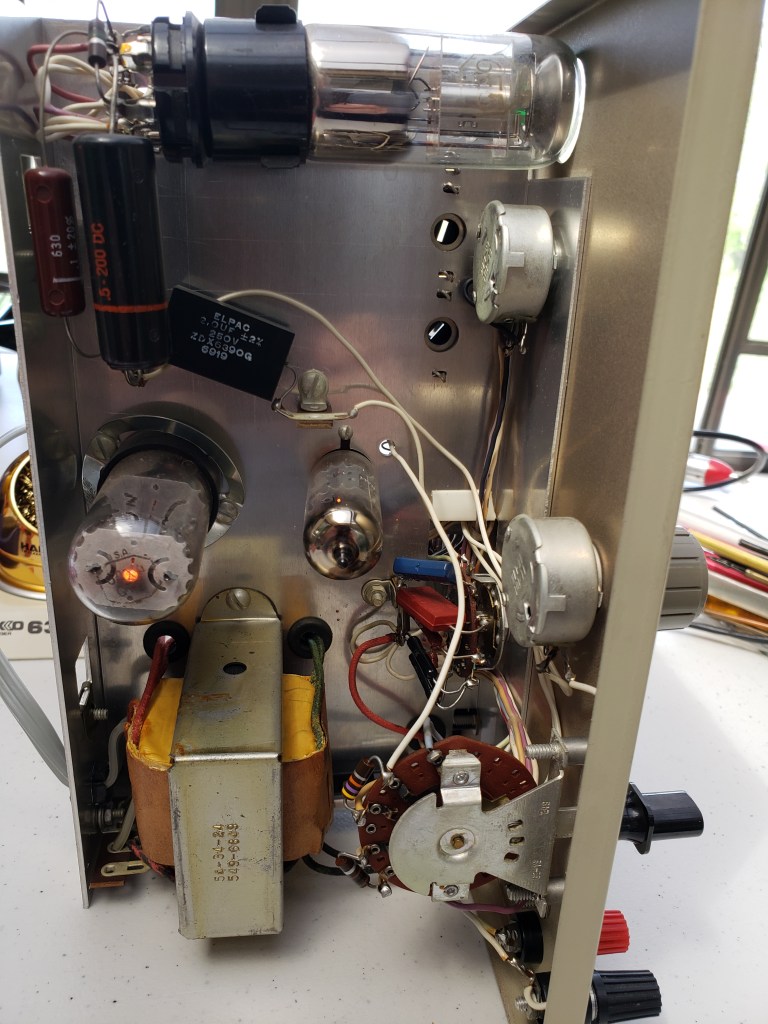
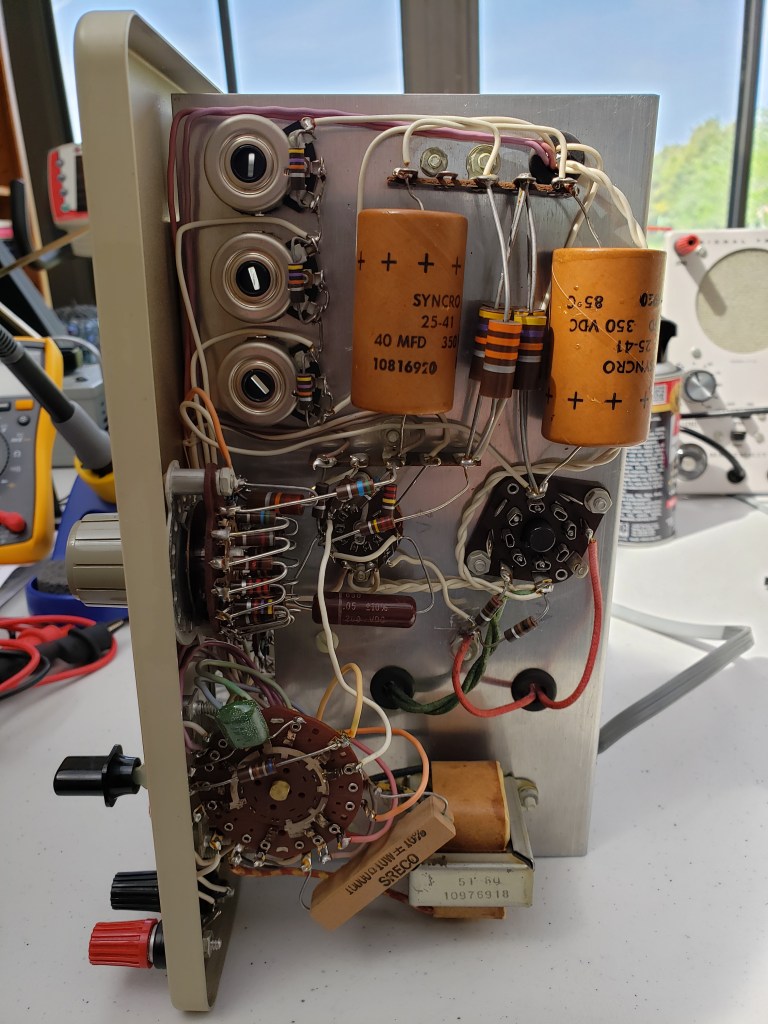
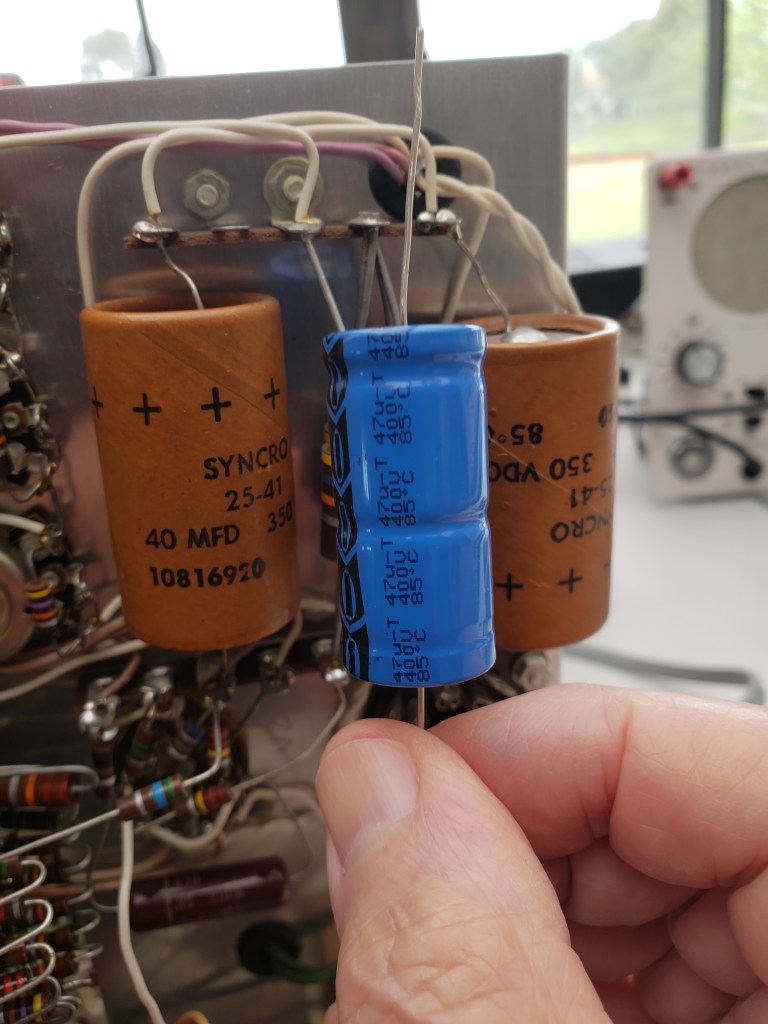
The two large orange capacitors will be replaced with new modern ones. These old capacitors contain a paste like substance that dries out over the years. One of the replacement capacitors is shown below. They are rated at 47 uF at 400 volts; it has slightly more capacitance and a little higher voltage. A little more is better. Notice how much smaller the new capacitors are than the old ones. The new capacitors have more capacitance and are rated at a higher voltage
 SLO-ELECTRONICS