
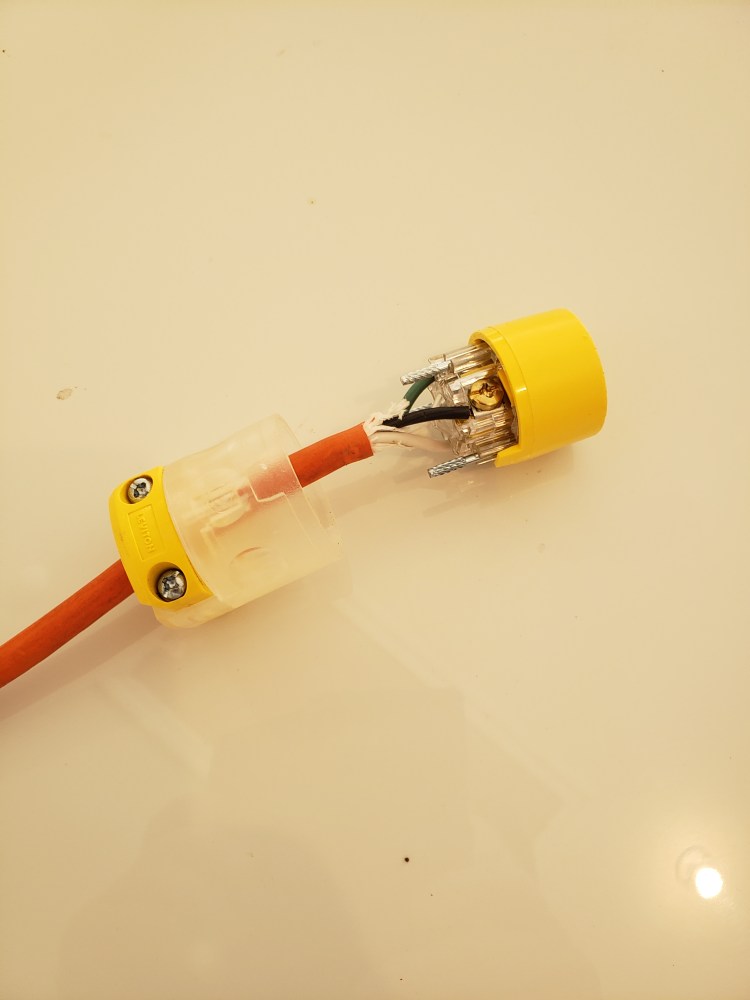
Most of us have ‘amputated’ an outdoor extension cord sometime in our lives. Replacing the plug correctly is easy.
- Replacement plugs with an LED are handy to indicate if the cord has electricity.
- Strip the cord and the wires back carefully, to not nick the wires.
- Strip 1/2″ off each wire.
- Attach the black wire to the gold connector or narrow blade.
- Attach the white wire to the silver connector or wide blade.
- Attach the green wire to the green connector or round pin.
Replacement Plug
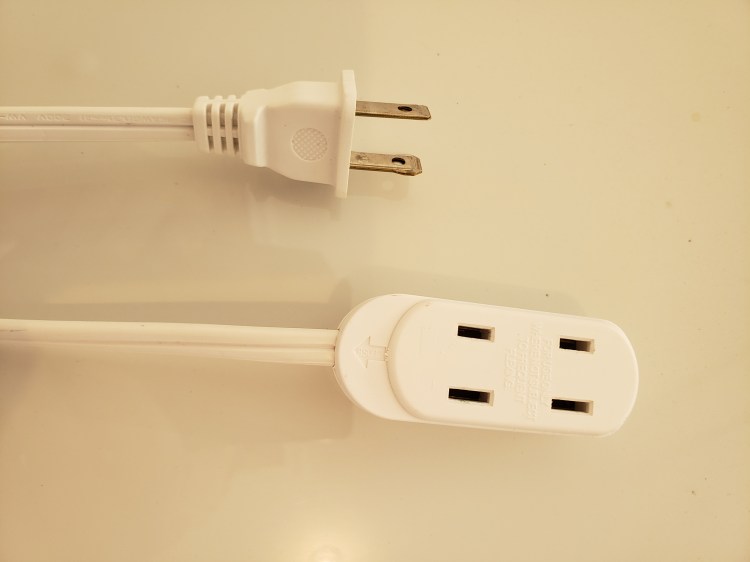
Indoor Extension Cord (no ground pin)
Indoor extension cords can also be repaired. Some indoor extension cords only have two wires – no ground wire. Around the 1960’s a new electrical outlet was making its way into homes. It had a wide blade (neutral wire), and a narrow blade (hot wire), and a separate ground connector. They are called polarized outlets. Before this time, you had a 50/50 chance of having a ‘hot’ chassis on appliances, depending upon which way you plugged the cord into an outlet. Now, you can only plug a polarized plug into an outlet one way. If you have an old lamp or appliance that does not have a polarized plug, it would be a good idea to have the plug replaced, by an electrician, with a polarized one. Radios and TV’s were especially dangerous to work on before polarized plugs. Every home should own a simple outlet tester to make sure the electrical outlets are wired and working correctly. Testers may be purchased at any hardware store for about $10.00 or less.
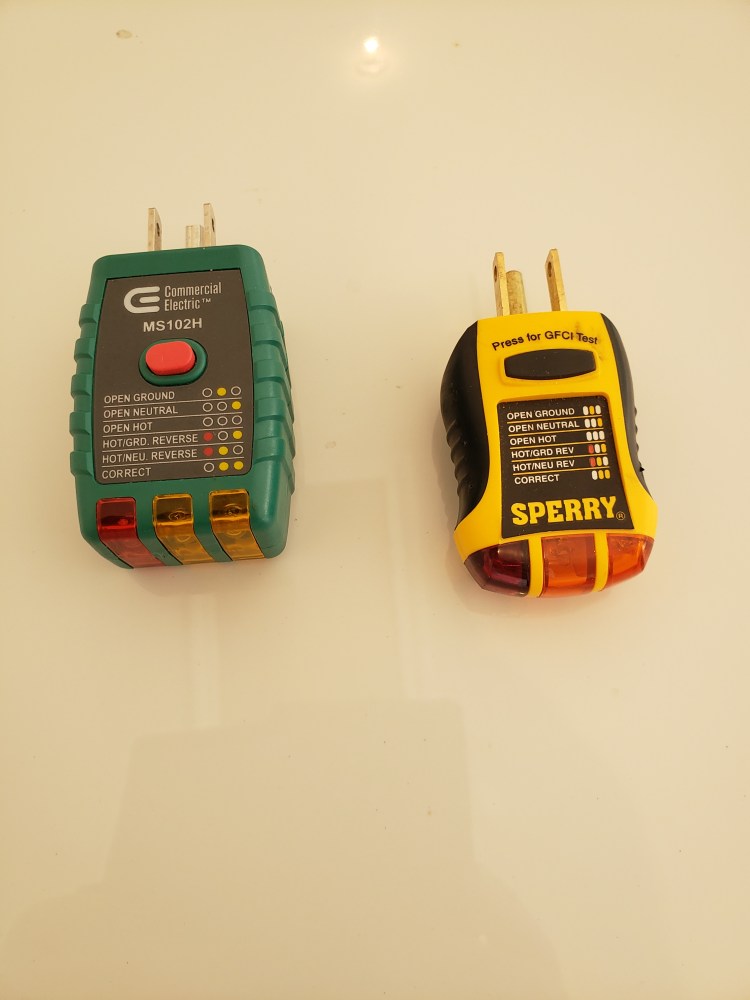
Outlet Testers 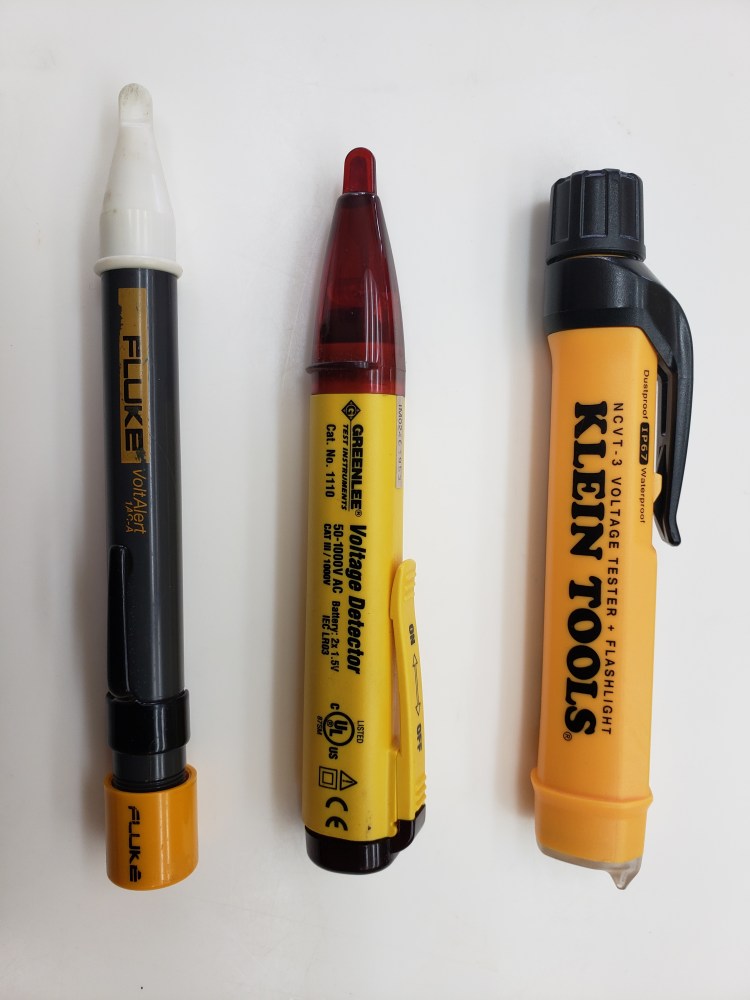
Electrical Wire Testers
The testers on the left will indicate if the outlet has power and is wired correctly. Some will also test the GFCI, if the outlet is on one of those circuits. GFCI circuits are much safer outlets and are usually found out outdoors, in kitchens, bathrooms, and other areas. They are very sensitive and can trip with only a few milliamps (thousands of an ampere).
The three testers on the right can test an individual wire and determine which wire is a hot wire or a neutral wire. This tester can test a 2 or 3 wire extension cord to make sure the (narrow blade) is the hot one. When replacing the end of an indoor extension cord, the neutral (wide blade) wire is usually ribbed or marked in some way to indicate this wire goes to the wide blade on the plug. If you are not sure, find someone who is knowledgeable to help you.
 SLO-ELECTRONICS