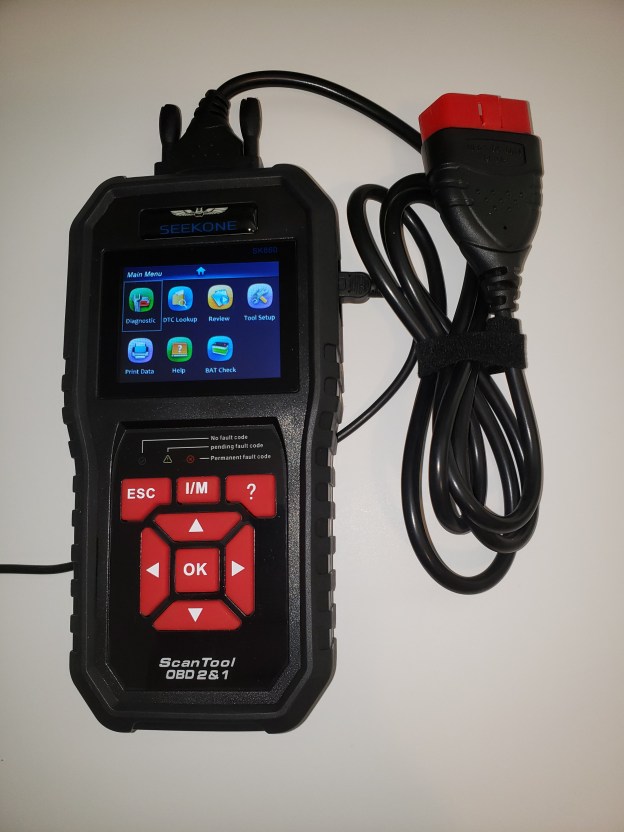
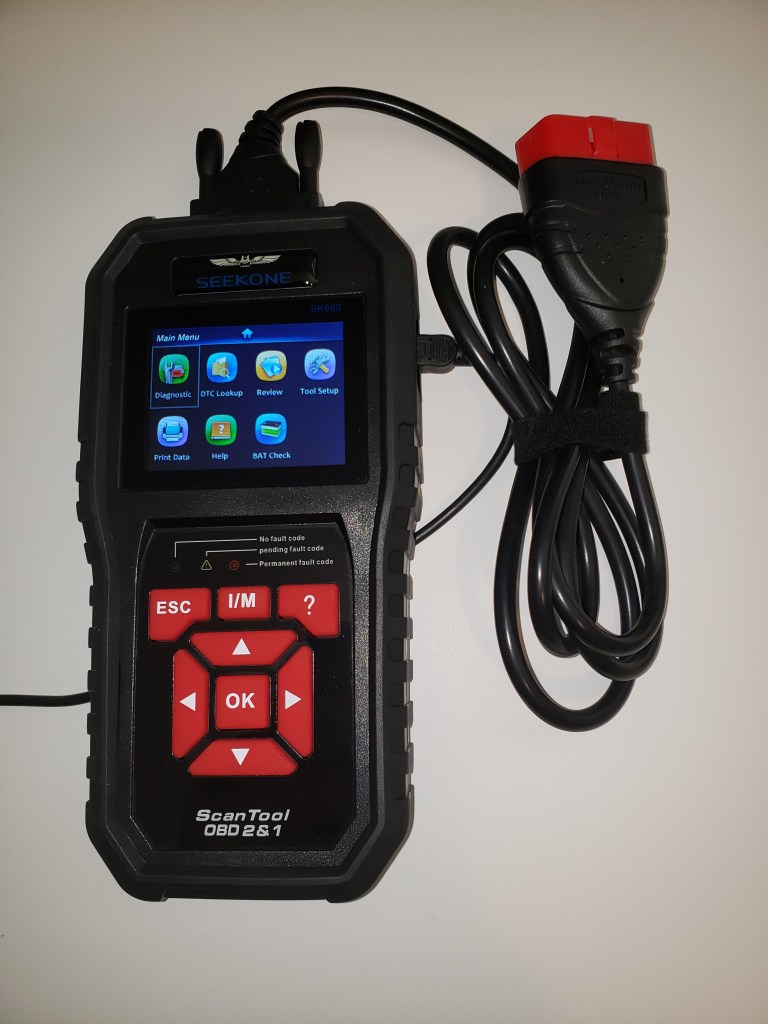
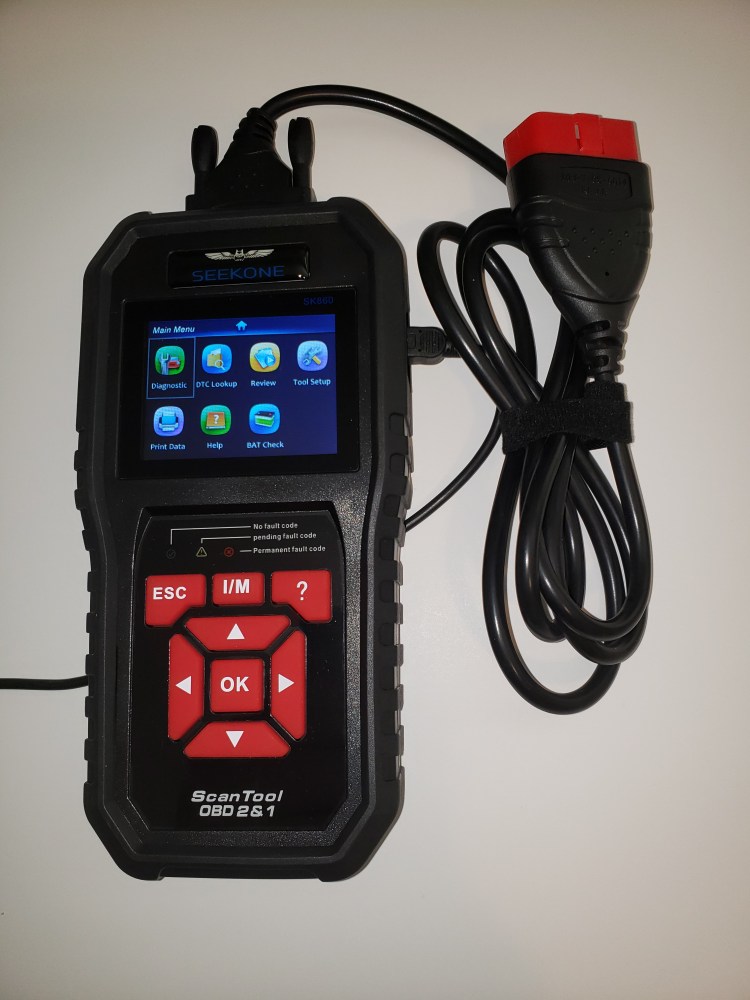
OBD II Tester
Check Engine Light – What to Do
Most of us have seen a light suddenly appear on our automobile’s instrument panel that says Check Engine, or something similar. The problem is: what are you supposed to check, or do? Without a device like the one above, you don’t have any idea as to what the problem is. I finally purchased an instrument like the one on the left. It was not the least expensive (mine was about $60.00), nor was it the most expensive one. (you can spent thousands of dollars) Owning a OBD II scanner will at least display most of the codes your car’s computer is sensing and give you some idea of what may be wrong with your vehicle. Without a device, you have no idea of what is causing your ‘check engine’ light on the instrument panel. There can be any number of different issues going on with your vehicle that may keep it from running efficiently or safely. Youcould be something malfunctioning that may strand you when you least expect it. A device like this will enable you to look at your car’s computer, and display codes stored in it from the various sensors and systems within your vehicle. Without an OBD II, you are at the mercy of the mechanic. (technician, as they are now called)
Your first thing you will need to determine when you purchase your OBD II scanner is where to plug it in. They use a standard plug, designed by the California Air Resources Board for use on cars beginning in 1998. The first cars followed a standard called OBD I; sometime later, OBD II was adopted. What is NOT standard is the location of the receptacle. It can be hidden in many places within a vehicle; most are under the dash while others are hidden behind a glove box or hidden behind an ash tray, etc. You may need to go to a WEB site to find where your OBD receptacle is hidden. Use a Google search argument like: OBD location.
Recently I visited my OBD 2 scanner manufacturer’s WEB site, and downloaded the latest updates into my tester. It was not difficult, and only took about 15 minutes to load the latest updates into it. Most of the codes begin with a letter, usually the letter ‘P‘, followed by 4 numbers. Even though your instrument may indicate the meaning of a code, it is a good practice to follow it up with a Google search for a more definitive explanation.
 SLO-ELECTRONICS